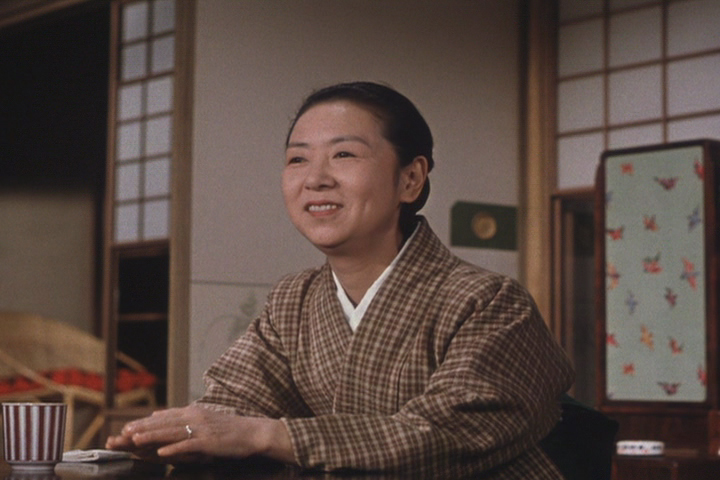
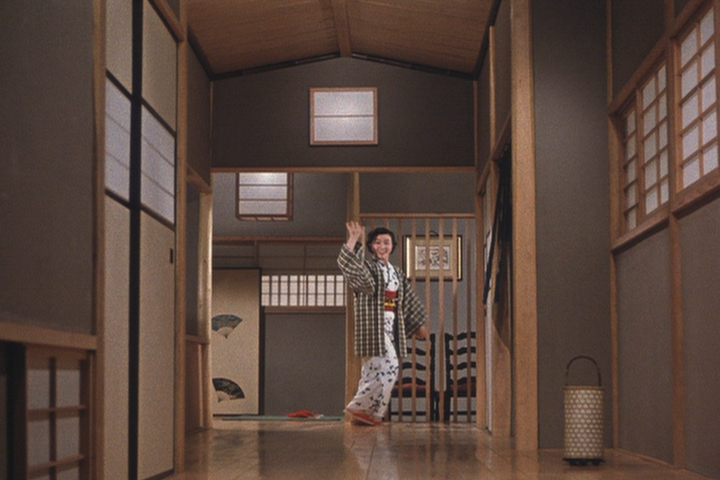
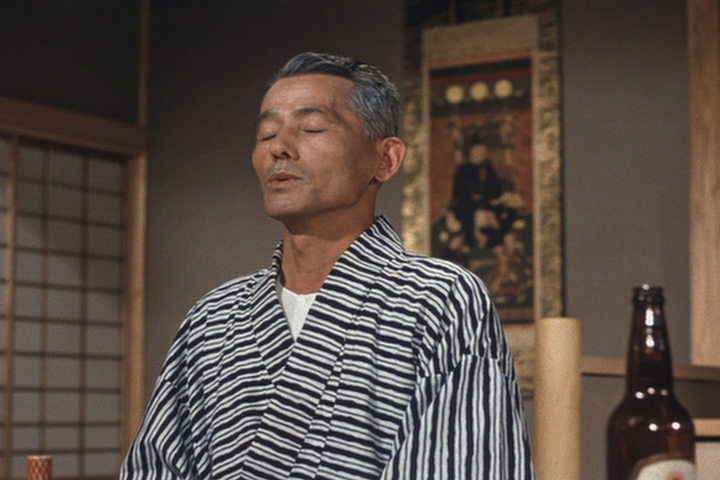
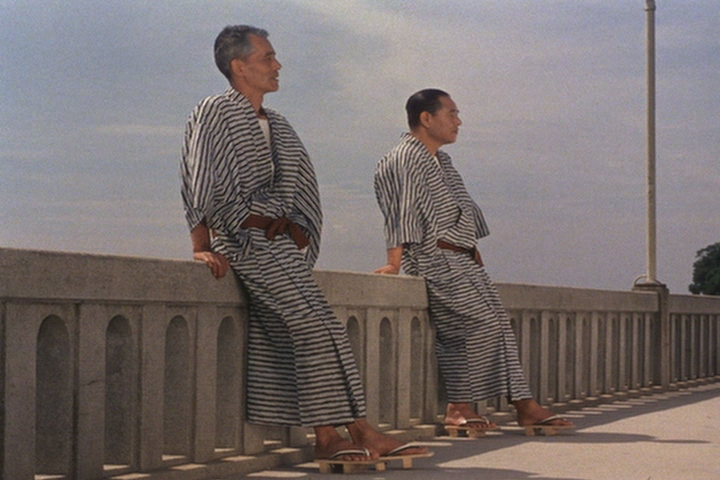
|
Color
. 118 minutes
Shochiku Ofuna Studio
Written By
Ozu Yasujiro
Noda Kogo
Cinematography
Atsuta Yuharu
Music By
Satio Kojun

Cast
Yamamoto Fujiko (Yukiko)
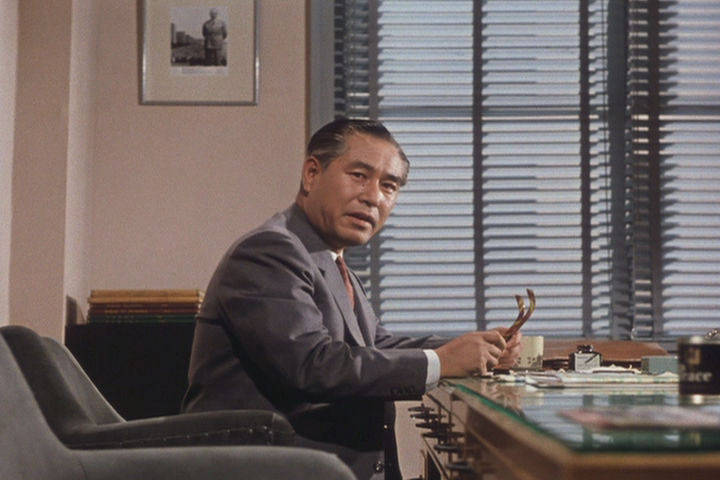
Saburi Shin (Hirayama Wataru)
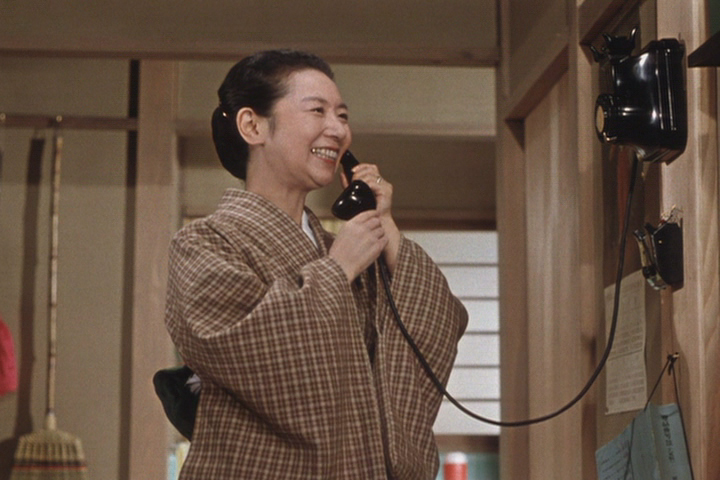
Tanaka Kinuyo (Kiyoko)
Arima Ineko (Hirayama Setsuko)
Sata Keiji (Taniguchi Masahiko)
Takahashi Teiji (Kondo Shotaro)
Kuwano Miyuki (Jirayama Hisako)
Ryu Chishu (Mikami Shukichi)
Naniwa Chieko (Sasaki Hatsu)
Watanabe Fumio (Naganuma Ichiro)
Nakamura Nobuo (Kawai Toshihiko)
|
Synopsis
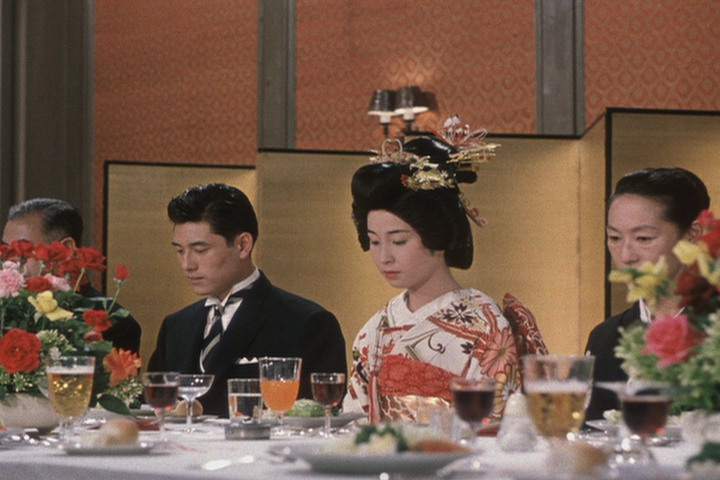
At the wedding reception of an old friend's daughter,
Hirayama congratulates the younger generation
on the freedom to choose their partners. However,
at the post-wedding drinks, he agrees to let his
friends find a suitable match for his daughter
Setsuko. Hirayama intercedes on behalf of two
young women who defy their parents plans for an
arranged marriage, but when Setsuko's boyfriend
makes a surprise call to ask for her hand, he
is furious and initially refused to attend the
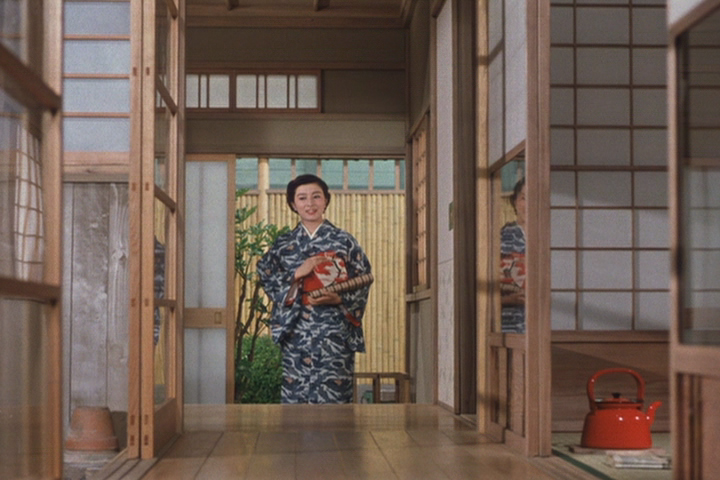
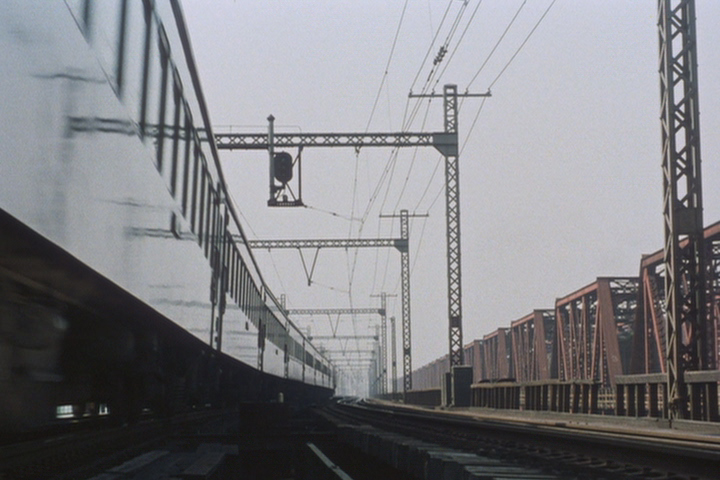
ceremony. However, while staying at an inn in
Kyoto, he is persuaded by the owner's daughter
to get on a train to see Setsuko in her new home
in Okayama.
Thoughts from Ozu
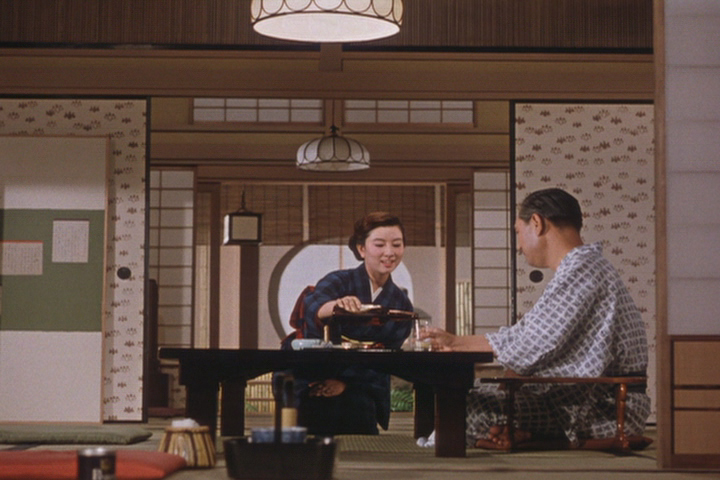
This is my first color film, as well as the
first film I cast Yamamoto Fujiko. I decided to
jazz it up as a sparkling comedy. Initially, I
had no inclination to make a color film, but the
company asked me to do so for the sake of Yamamoto.
|
|
Background
The
49th film, shot from May to August 1958. In January
of that year, Ozu traveled to the island of Sado
to look for a location for his next film, which
was to be a remake of his well-achieved pre-war
film A Story of Floating Weeds. However,
this year's winter was warm, and snow was scare
even in Niigata and Sado, and the project had
to be abandoned. As a result, Ozu wanted to film
a novel by Ton Satomi, his favorite writer, with
whom he was on good terms since his removal to
Kamakura. Satomi suggested that he rather write
a novel based on a story that was intended to
be filmed. In the quite strange way, the novel
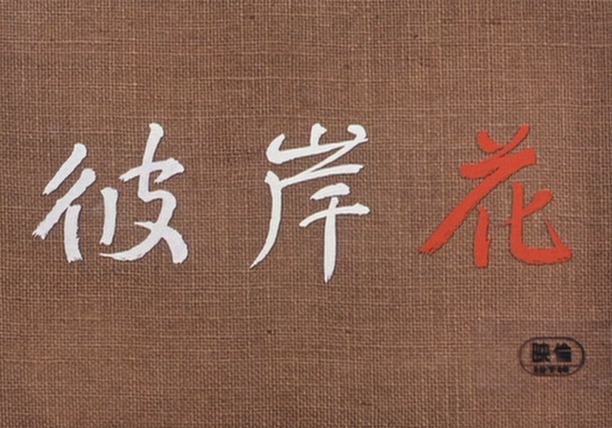
Equinox Flower by Ton Satomi, and the homonymous
screenplay were born. Ozu had not intended to
make this film in color, but since Shochiku had
hired the top-ranking star Yamamoto Fujiko (the
incarnation of Japanese beauty at that time) from
Daiei, the company president himself requested
the change. In 1958, color films and wide screen
were quite widespread, but not as much as in America.
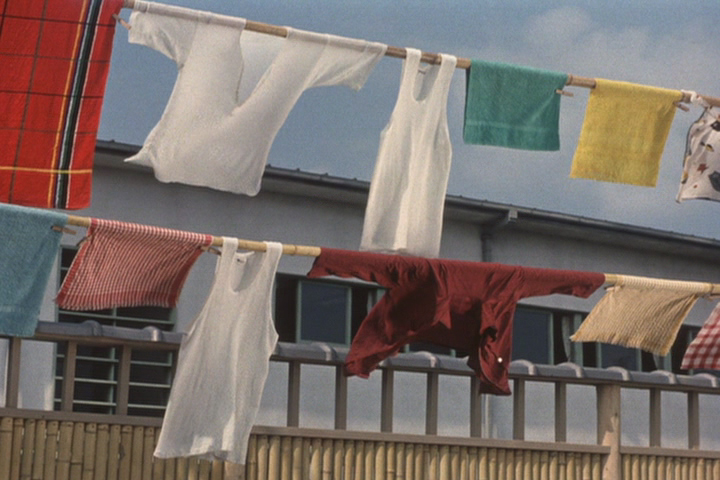
Ozu, who was very particular about the composition,
never showed interest in wide screen, but color
was a different thing (if not, nobody would have
been able to convince him). However, he did not
choose the very popular, splendid Eastman colors,
but the more sober Agfa colors. Probably, he also
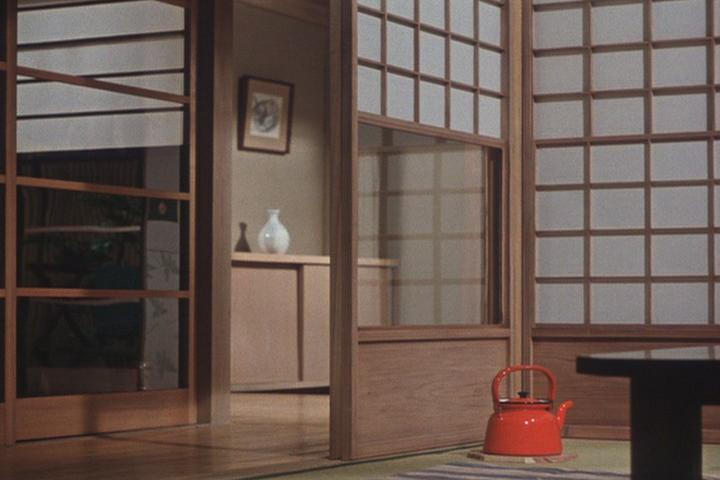
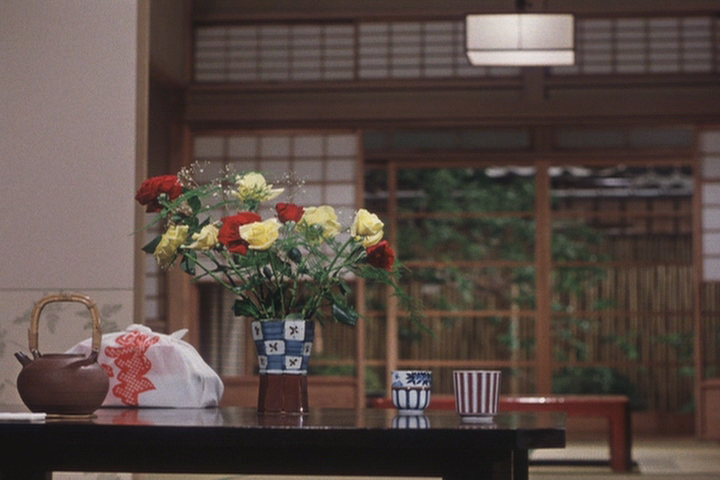
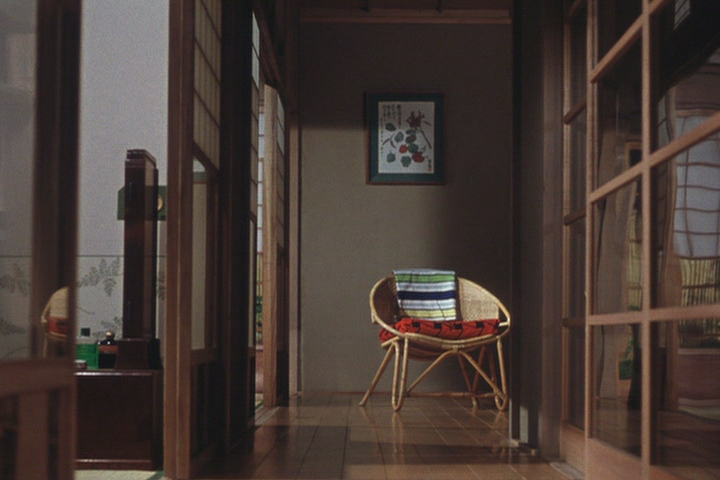
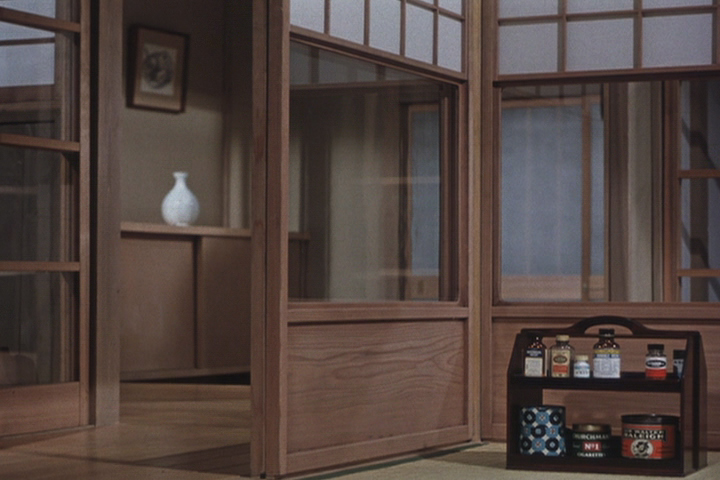
liked the red color of Agfa. The red properties
in Ozu's color film are famous. This film is set
in an "uptown" mansion, and the daughter's
marriage moves the story forward. For the first
time since What Did the Lady Forget?, Equinox
Flower is a real comedy. The motif of the
daughter's marriage caused by her boyfriend's
transfer is repeated here. Contrary to the expectation,
Yamamoto Fujiko did not interpret the role of
the daughter who gets married, but is used as
a kind of Deus ex machina. This well-calculated
decision had an excellent result. The house of
the family is in Azabu, a residential quarter
in Tokyo. However, this house does not give a
traditional impression, such as in Brothers
and Sisters of the Toda Family or The Flavor
of Green Tea Over Rice, but it represents
the father's success, going from office worker
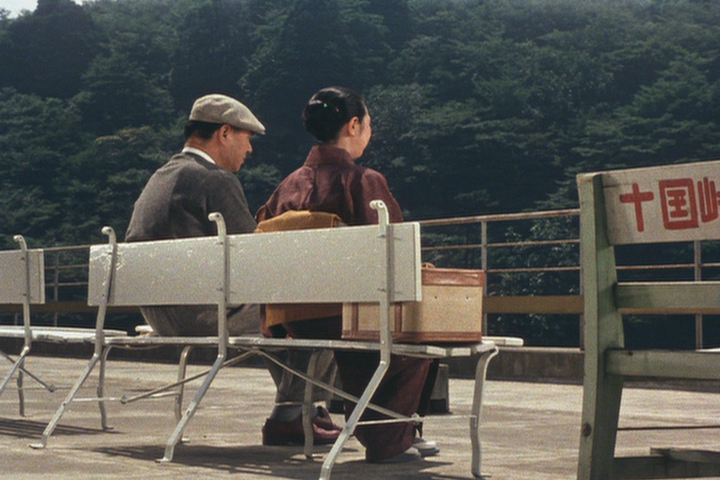
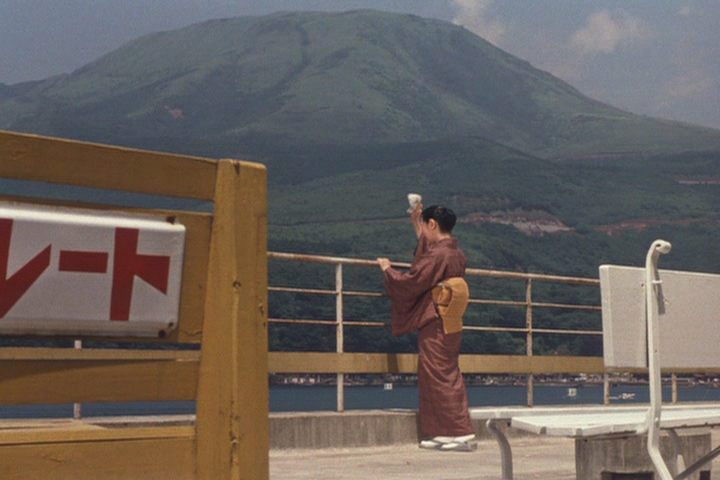
at the shores of late Ashinoko is connected to
the couple's conversation in the earlier I
Was Born, But... by the use of the line "life
will be easier from now on." In this context,
it is also possible to think of this film as a
development and a modification of the films set
in the suburbs.
|
Personal
Thoughts and Comments
Ozu was never one to quickly change with the technology
of art form. His first sound film came in 1936 and
he never made a film in Widescreen format. He also
did not make a color film until 1958 with this film,
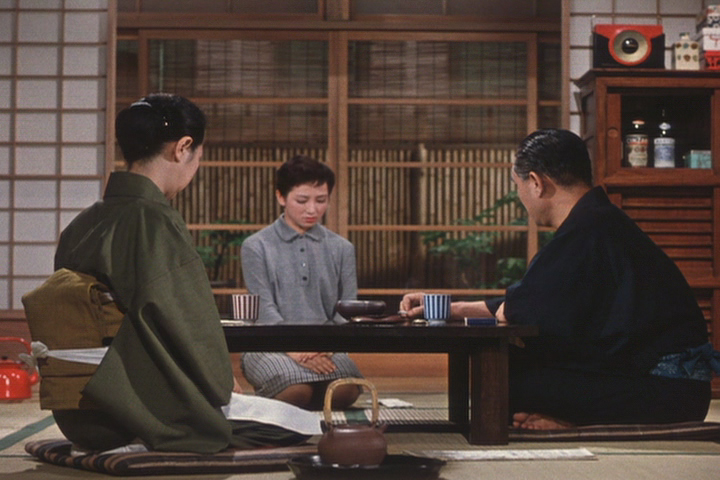
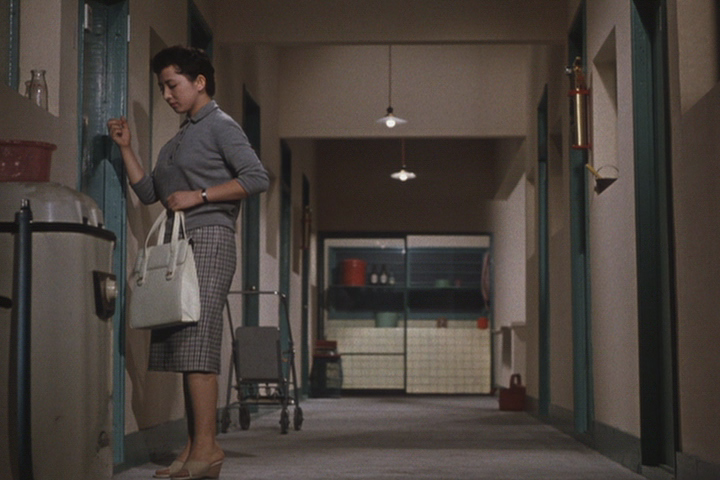
Equinox Flower. A late arrival to color,
but remarkable none-the-less, as this is a beautiful
film. Ozu enhances the expression of the film through
color and gives the film his patent simplistic beauty,
richness, and poetry. Ozu features his traditional
views of family and father-daughter generation differences.
Equinox Flower details Japanese rebellious
and independent post war youth generation that went
against many of the common Japanese traditions (such
as arranged marriages). The father doesn't necessarily
dislike the man his daughter wants to marry, or
even her desire to go against tradition and choose,
but he can not accept the fact that she has "defied"
her parents. Ozu leaves the film open and sympathizes
with both the father and daughters feelings. With
a detailed vision of object placement, color, and
composition, Ozu perfectly captures the emotional
tone with a trademark subtle visual expression and
here a blend of lighthearted humor (through the
inconsistency and ironies that make up living).
Repeat viewings of this film leave me feeling that
Equinox Flower is one of Ozu's most complex
films. Every time I see this I get something new
from it and I have a difficult time expressing my
thoughts on the film except to say it is one of
Ozu's very finest masterworks. |